

RUHX
Back in 2022, Yarn developed the new tone of voice for RUHX – the NHS charity of Royal United Hospitals Bath (RUH). The guidelines are packed with varied examples and super detailed, specific instructions. You know; my usual jam.
But when RUHX came to revamp their vital, and incredibly sensitive, messaging about gifts in wills, the legacy and tributes team wanted extra help getting it right. So, I wrote their gifts in wills guide and leaflet and created a voice guideline extension – just for legacy fundraising comms.
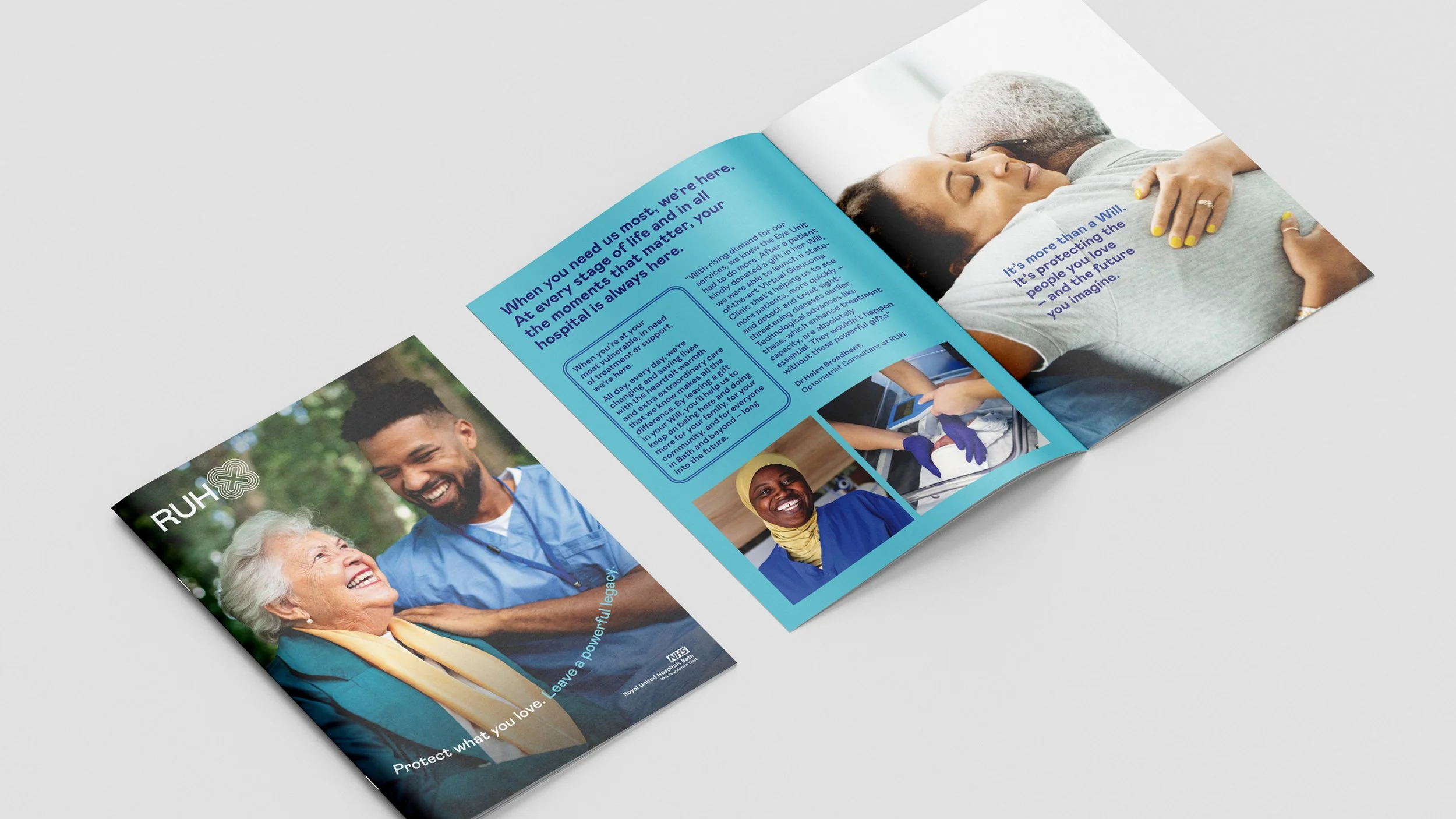
‘When you’re at your most vulnerable, in need of treatment or support, we’re here. All day, every day, we’re changing and saving lives with the heartfelt warmth and extra extraordinary care that we know makes all the difference. By leaving a gift in your Will, you’ll help us to keep on being here and doing more for your family, for your community, and for everyone in Bath and beyond – long into the future.’
Guide excerpt
Supporting a charity is emotional. People give because – for all kinds of different reasons – they care about the cause and want to help. Copywriting for fundraising, then, has to be emotive, building relationships with readers and inspiring them to make an impact. It also has to be persuasive, encouraging potential supporters to get involved or make donations without seeming crass. It’s a really delicate balancing act.
But writing for RUHX about legacy giving had extra challenges. Those leaving money in their will won’t see the results of their gift, so benefit messaging needed to be broader and more forward-looking. There were legal and ethical sides too. Charities like RUHX can’t (and wouldn’t want) to tell people what to leave in their will. And ultimately, anyone writing a will is confronting their own mortality, their legacy, and all the big, existential questions that come with it. Who am I? How do I want to be remembered? What do I want to leave behind?
This was a complex copy brief, and tricky to get right without losing the charity’s personality. But that didn’t mean a different voice; instead, the team needed extra guidance to apply what they already had and shake free from the coldly formal language of the past.
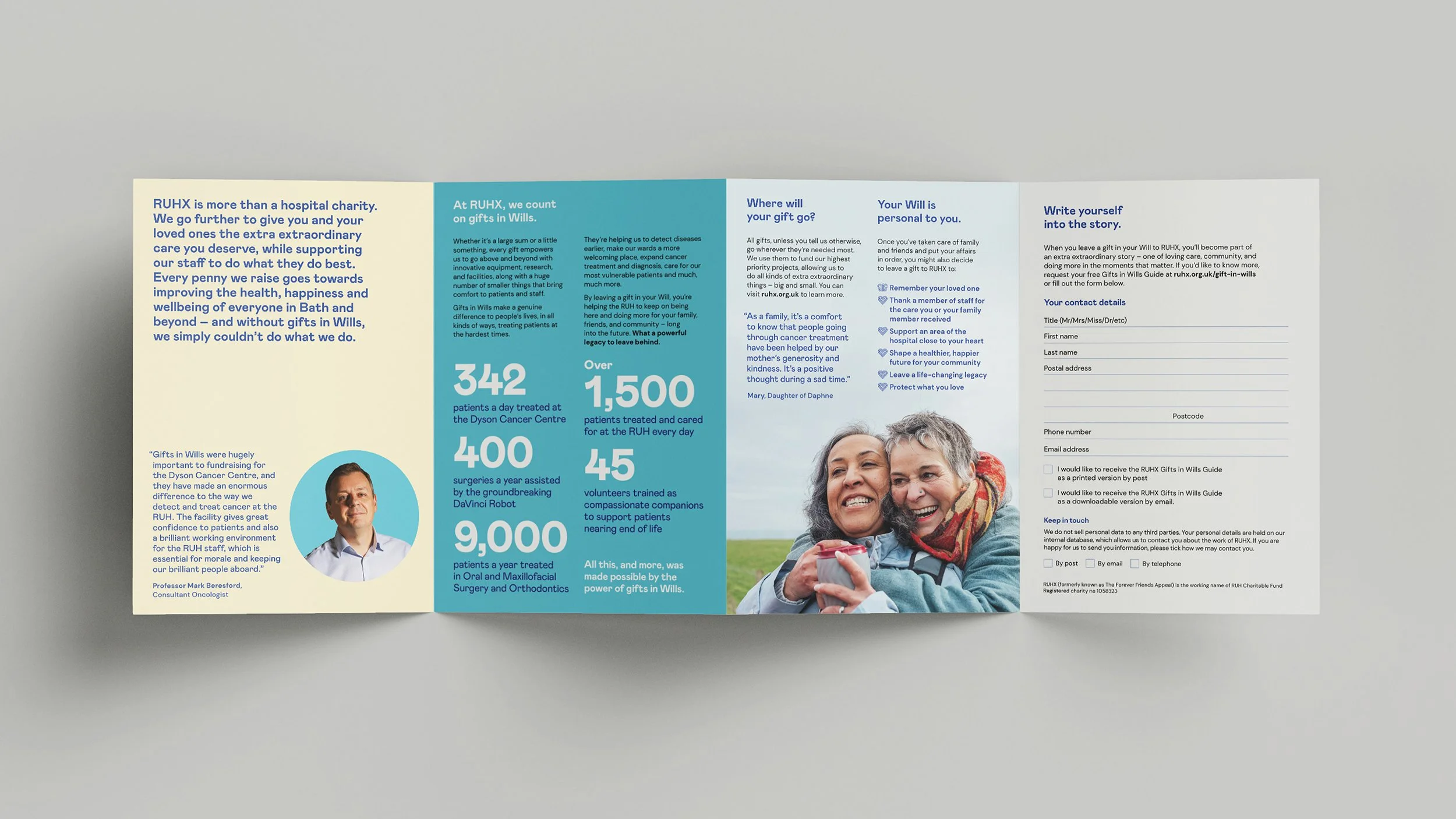
‘Every penny we raise at RUHX goes towards improving health, happiness and wellbeing for everyone in our community – now, and long into the future – and we simply couldn’t do what we do without gifts in Wills. They help us to fund life-changing and life-saving projects, equipment and facilities, from the Dyson Cancer Centre to groundbreaking robot surgery. They also help us take care of little details that make a big difference, whether it’s a toy for the Children’s Ward, fresh artworks for a corridor, or an extra cosy pair of bed socks – so any size of gift can make an impact.’
Letter excerpt
Working with the existing RUHX voice guidelines, I looked at how we could add layers of sensitivity and possibility, and considered how best to connect and empathise with readers tackling a very difficult, personal task. I explored different ways of balancing the voice traits to empower, inform, and feel with potential supporters, without an ounce of pushing or shoving.
I use ‘might’, ‘could’, ‘perhaps’, ‘may’, ‘hope’ and ‘can’ for the softest of treads, showing RUHX has no expectations of the reader. There’s a lot of consideration of the tough task ahead: ‘we know this is a big decision’, ‘we’re here to help’. Phrases like ‘whether it’s a large sum or a little something’ emphasise that any size of gift is appreciated, and anyone can make a difference. And everything is underpinned with sincere gratitude: ‘it’s an enormous privilege to be remembered in your Will’. The effect is incredibly gentle, yet compelling – an altogether more human, engaging, and tactful voice. A voice the reader can trust.
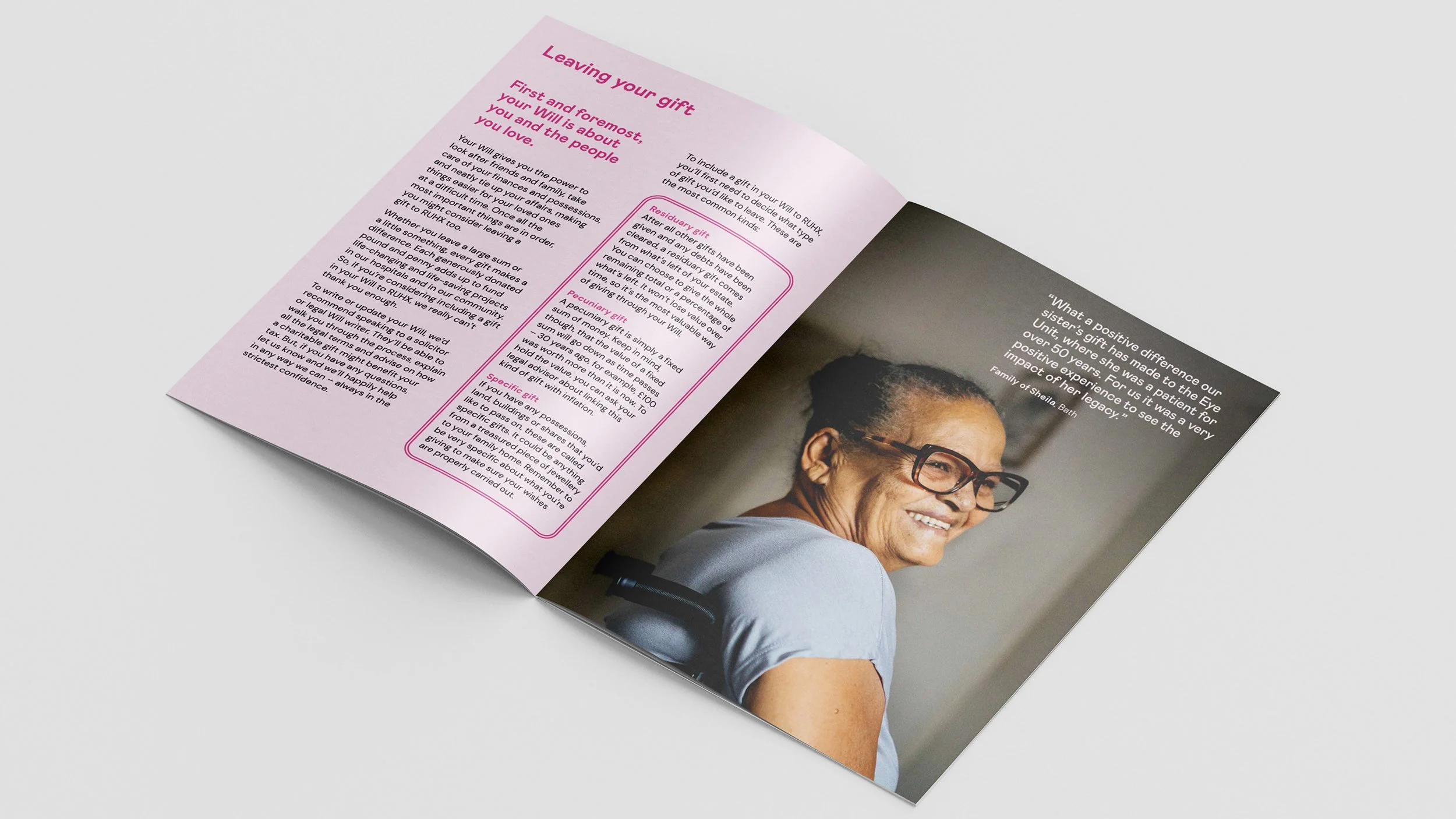
‘First and foremost, your Will is about you and the people you love. It gives you the power to look after friends and family, take care of your finances and possessions, and neatly tie up your affairs, making things easier for your loved ones at a difficult time. Once all the most important things are in order, you might consider leaving a gift to RUHX too.’
Guide excerpt
Having written the team’s most important communications – their guide, leaflet and a supporter letter – I compiled a set of dedicated micro tone of voice guidelines, just for writing about legacies. It’s an extension of the main RUHX voice system, explaining how to balance the traits in specific applications and guiding the team through annotated examples. There’s a matrix of core messages too, making it easier for them to talk consistently about gifts in wills. All of that will help them write with both compassion and conviction – securing gifts that will support the work of RUH for years to come.